
Stock analysis
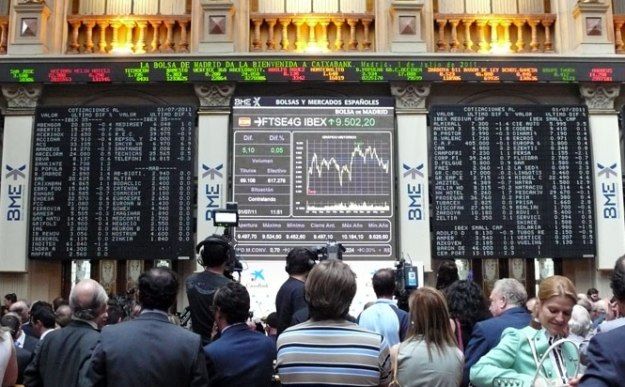
Stock market analysis is the discipline that studies the movements of stock prices through graphs, balance sheets, time series, statistical series or theories of various kinds.
When we talk about stock market analysis we are referring to a very broad field. Broad, because there are many types of analysis from which the study of the stock market can be approached. Since the birth of technical analysis (chart analysis), types of stock analysis have not stopped proliferating. More if possible, with the advancement of technology.
It is generally known that there are four types of stock analysis:
- Technical
- Fundamental
- Macroeconomic
- Quantitative
However, although these four encompass the most important types of stock market analysis, we cannot fail to mention many others. For example, political analysis through the theory of the presidential cycle. The analysis of the market microstructure. Analysis using behavioral finance. The theory of signals. The agency theory.
Technical analysis
Technical analysis is one that studies stock movements through graphs and indicators based on the price of the quotations. Technical analysis can be subdivided into:
It is the simplest type of stock analysis. Derived from the above it is also the most popular.
Fundamental analysis
Fundamental analysis studies the prices of financial assets based on the financial variables that affect them. In such a way that it calculates what is the theoretical price that an asset should have. See theoretical price
Fundamental analysis is completely independent of price charts and is often applied to companies. Likewise, fundamental analysis focuses on two types of analysis:
- Microeconomic analysis: the consolidated accounts of the company, as well as other non-quantitative variables that may affect its value. For example, SWOT analysis or studies on barriers to entry in the sector are carried out.
- Macroeconomic analysis: Components of the economy in which the company operates are analyzed, such as GDP, inflation or export policy.
It is common for fundamental analysts to have a macroeconomic frame of reference. That is, having your own vision of how the economic situation can affect that type of company in particular.
Macroeconomic analysis
Macroeconomic analysis, also called macro analysis, studies stock market movements based on exclusively macroeconomic variables. That is, they focus on aggregate variables. It usually applies to countries or economic zones. Among the variables studied by macro analysis are:
This type of stock analysis is complex. It requires having extensive knowledge of economic analysis. In addition, it takes
Quantitative analysis
Quantitative analysis focuses on the study of time series and mathematical models to analyze the prices of financial assets of any type. Due to its breadth, quantitative analysis has a separate treatment. However, other types of analysis may include techniques of quantitative analysis.
For example, technical indicators are a variant of quantitative analysis. Fundamental analysts can use quantitative techniques to analyze financial statements. And, in the same way, macroeconomic analysts can use quantitative techniques to add reliability to their analyzes.
In other words, quantitative analysis can be applied to any type of analysis. However, some techniques are unique to quantitative analysis. For example:
Criticism of stock market analysis
Regardless of the types of stock analysis, there are currents of financial thought that state that stock analysis is not effective. According to the random walk theory, asset prices follow a random and unpredictable sequence.
Another criticism of the stock market analysis comes from those theories that explain the efficiency of the market. According to the efficient markets hypothesis, there are three types of efficiency:
- Weak: Past information is not valuable. But current public and private information does. Technical analysis does not work, but macroeconomic, fundamental and quantitative analysis does.
- Semi-strong: . Past information and public information are not valuable. But private information is valuable. They do not work any type of stock market analysis.
- Strong: Neither past, public, nor private information is valuable. The price incorporates all possible information.
Leave a Reply