
appropriate

The adjective appropriate qualify that or that which is according, coherent or related to certain conditions or needs. For example: "I think the new governor has given a speech appropriate to the social context", "We have to hire a manager with the appropriate profile for the company to maintain its growth", "That suit is not appropriate for an event of this type".
The appropriate thing, in this framework, is something logical or congruent with the environment or the condition of things. If a lawyer must attend a job interview, it is appropriate to bring shirt, tie and jacket. On the other hand, if you wear shorts and a football shirt, your clothes will not be suitable for a work meeting.
As well as any other term of a subjective nature, appropriate It is not usually used to qualify something undeniable and necessarily valid (such as being a property of the field of physics that always holds), but rather points out questions framed in a context cultural, which in turn is limited by the time to which it belongs.
Returning to the example of clothing that is appropriate for a job interview, it is important to note that today there are many companies that allow the use of casual clothing to their employees. Although this does not occur in the field of law, for which lawyers still have the obligation Formal dress is commonplace in the technology industry, especially in software development.
This has not always been the case, since even in this area the use of formal dress was imposed at the end of the 80s and early 90s. This change does nothing but confirm the character subjective of the term appropriate, since even in the same building it can take on different meanings from year to year, from day to day.
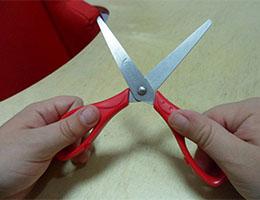
Certain objects have a appropriate use and others that are not correct and that can even be dangerous. The proper use of scissors is to apply force to cut paper or cardboard: it is not appropriate to use it to threaten another person or to cut wood. It is also not appropriate to use a revolver to celebrate, shooting into the air, since this practice could lead to the death of any person due to the bullets.
On the other hand, manufacturers usually indicate the appropriate use of their products in a section of the user manual, to minimize the risks of accidents, as well as the probabilities of lawsuits by your clients. Of course, this is often nothing more than a mere list of suggestions, and not absolute truths; For example, for some products the use of rechargeable batteries is not recommended, but this does not prevent millions of people from using them and not suffering any negative consequences, such as further deterioration.
Appropriate, on the other hand, is a conjugation of the verb appropriate: keep the property Of something. More precisely, it is its participle, and it can be used to form compound tenses, as shown below: "I have not appropriated any of that woman's belongings: the complaint is false", "They accuse the mayor of having appropriated funds destined to carry out public works", "The company has appropriated public space that belonged to all the neighbors: we demand that the land be returned to us!".
Depending on the Spanish-speaking country, the use of time compound is more or less frequent, and therefore can be formal or colloquial. In Argentina it is more normal to resort to the Simple Past Perfect ("The mayor appropriated public funds"), while in Spain the opposite occurs.
Leave a Reply