
Expansive monetary policy

What is expansionary monetary policy?
Expansive monetary policy is a type of the monetary policy that It is based on expanding the money supply of a country, with the aim of stimulating its demand.
By implementing this type of monetary policy, you not only increase the money supply (in circulation) but also economic activity is boosted, managing to keep interest rates low and promote consumption and investment.
Anyway, this policy runs the risk of generating inflation.
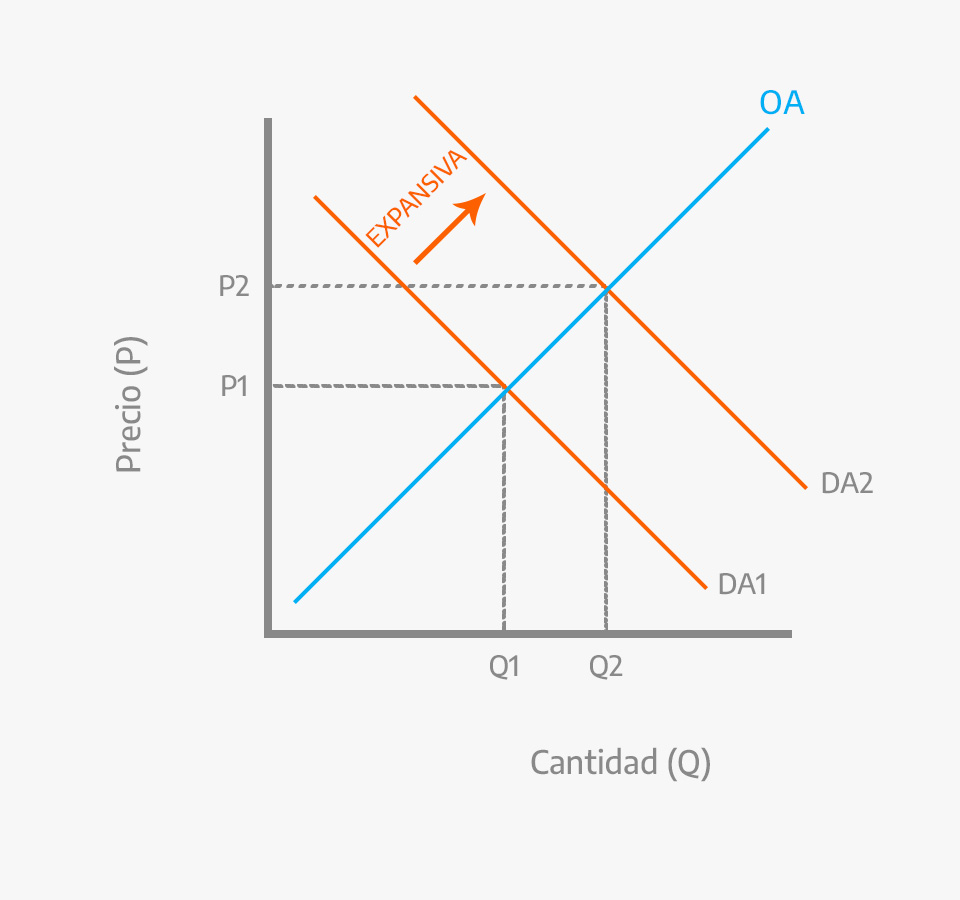
Expansive monetary policy seeks to expand aggregate supply, stimulating aggregate demand.
Characteristics of expansionary monetary policy
The main characteristics of the expansionary monetary policy are the following:
- Its main objective is to increase money supply to boost the economy.
- Seeks stimulate aggregate demand.
- Reduce interest rates.
- Put more money in circulation to encourage consumption.
- By stimulating consumption, there tends to be an increase in production and employment.
- You run the risk of generating inflation.
Expansive monetary policy tools
Expansive monetary policy uses different tools or mechanisms to increase the money supply:
- Include open market operations, such as purchase and sale of government bonds and other financial assets that reduce the interest rate.
- Reduce the cash ratioIn other words, banks cover their reserve deposits with a smaller amount of money, in order to have more money for the country's economy.
- Modify permanent facilities so that banks ask for more money from the Central Bank and grant their clients better loans, thus injecting money into the economy.
Effects of expansionary monetary policy
Various consequences, both positive and negative, arise from the expansionary monetary policy.
positive effects
The main positive effects of the expansionary monetary policy are the following:
- Increase in consumption and investment starting with the printing of money.
- Increase in aggregate demand, which encourages the market.
- Increase in production and employment.
Negative effects
The main negative effect caused by expansionary monetary policy is generate inflation.
As there is more money in circulation, families have more income to consume and therefore are more willing to pay for goods and services, which can lead to companies not being able to meet market demand, there is a shortage and therefore prices go up.
Later, Inflation caused by increased demand, which occurred from monetary stimulation, can have serious consequences for the economy, such as the loss of purchasing power or a hyperinflation that causes the recession of the economic cycle.
Leave a Reply