
Declining book depreciation

The decreasing accounting amortization method is a way of depreciating assets that consists of assigning to each year of useful life a consecutive digit that corresponds to the series of natural numbers in a decreasing way. It is also known as the decreasing number of digits method or decreasing sum of digits method.
It is the inverse method of increasing amortization and is characterized by having decreasing amortization quotas, so that the first years the asset depreciates through an amortization expense higher than the rest of the years of assigned useful life following a decreasing trend. .
This is often used for goods where the risk of obsolescence is very high, such as office computers.
Calculation of the repayment installment
To know what is the annual expense for the amortization of assets we must do the following:
- Assign the years of useful life in which the asset will be fully amortized based on the estimated period that it will generate income in the company.
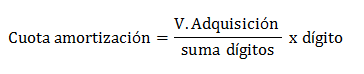
- Perform the calculation of the decreasing sum of digits. If an asset has a useful life of 3 years, the first year would be assigned the digit 3, the second year the digit 2 and the third year the digit 1. The total sum of the digits would be: 3 years + 2 years + 1 year = 6.
- Calculate the depreciation expense with the following formula:
Example of increasing depreciation
A company has a computer that it acquires on 01/01 / 20XX for an amount of 1,000 euros. Due to the speed with which this equipment becomes obsolete, it is considered that its wear will be much greater in the first years of use, so the management decides to apply the decreasing accounting depreciation method. The useful life estimated by the CFO for this machinery is 4 years.
What is the annual amortization expense?
| Year | Digit number | Amortization fee | Accumulated amortization |
| 20X0 | 4 | 1,000 / 10 * x 4 = 400 | 400 |
| 20X1 | 3 | 1,000 / 10 x 3 = 300 | 700 |
| 20X2 | two | 1,000 / 10 x 2 = 200 | 900 |
| 20X3 | 1 | 1,000 / 10 x 1 = 100 | 1,000 |
* Total digits = 4 + 3 + 2 + 1 = 10
Leave a Reply