
protected areas
A area, a term that comes from the Latin area, it's a space or terrain that is delimited in some way, either physical or symbolic. Protected, on the other hand, is what has protection (shelter, shelter).
The protected areas, in this framework, are special sectors that are established with the objective to take care of its biodiversity and its natural conditions. These areas are subject to a particular legal regime to ensure their proper conservation.
By establishing a protected area, authorities try to minimize the impact of human action about the environment. It is possible that in a protected area it is not allowed to build, drive or light a campfire, to name a few Actions that threaten nature.
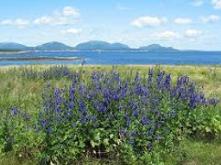
There are different classes of protected areas according to the legislation of each country. A protected landscapeFor example, it is a natural territory that is preserved for its cultural and aesthetic qualities. In this particular case, the human being may have even significantly intervened in the environment; However, the resulting combination of their actions and the response of nature has given a well-defined area, with an unparalleled beauty and an incalculable value from a cultural or ecological point of view.
It is worth mentioning that the scenery protected can be marine or terrestrial. Among the most significant examples are the Protected Landscape of Las Lagunetas, located on the island of Tenerife (Spain) and the Santa Teresa National Park. The latter is called a "national park" although it is not the category to which it belongs, which is defined below; the inconsistency is due to the fact that it was baptized years before the classification system we use today was implemented.
When you want to contribute to the conservation of the fauna, flora or geology of a place, you can create a protected area known as ecological Reserve or natural reserve: the Ecological Reserve of Buenos Aires (Argentina), the Sierra de la Malcata Nature Reserve (Portugal), etc.
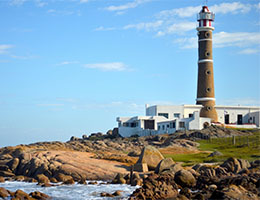
The National Park It is another type of protected area that has an extraordinary legal status. Is about spaces in which there are one or more ecosystems that are not significantly threatened by human action, since they are not exploited or occupied to the point of being able to significantly alter them. Some of the most important examples within this category are the Cabo Polonio National Park in Uruguay, the Table Mountain National Park from South Africa and the Lake Tai National Park on China.
In national parks we can find animal and plant species, habitats and geomorphological sites of great interest for science, education, or even the recreation industry. Needless to say, beauty These landscapes have almost no rivals, and that is why they are often used by filmmakers to impress audiences with scenarios that often seem like fantasy to those who have never left the city.
Another space that we can consider within the group of protected areas is the natural monument, where it is common to find one or more well-defined natural elements that represent an incalculable value at the national level, such as threatened habitats - both plant and animal species -, a site seen only there, or very particular geological formations. In the same way as in most of the previous cases, the intervention of the human being in a monument natural it is not always allowed, or it must be subject to a very strict level of control and cannot be on a large scale.
Leave a Reply